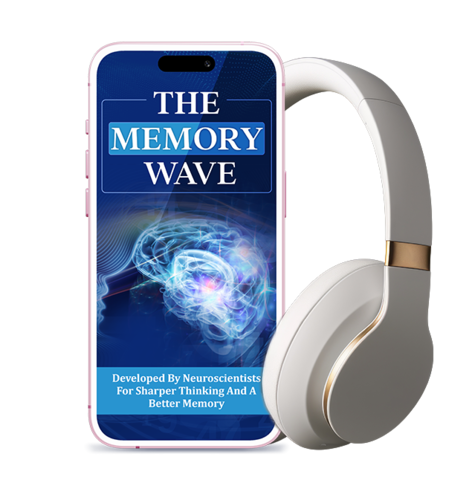
A digital audio program that uses sound frequencies to gently guide your brain toward Gamma activity — the brainwave pattern linked with memory, focus and mental clarity. Press play, put on your headphones, and listen for 12 minutes a day. No supplements to swallow, no apps to manage, no equipment to buy.
Most brain-support products ask you to swallow something: a capsule, a powder, a dropper of herbs. The Memory Wave takes a different route entirely. It is a digital audio track, roughly 12 minutes long, that you listen to once a day through ordinary headphones. The track is built around brainwave entrainment — the idea that rhythmic sound can gently nudge your brain's electrical activity toward a particular frequency. In this case the target is the Gamma band, around 40 Hz, the fast brainwave pattern that neuroscientists associate with attention, learning, memory formation and the brain's ability to bind information together.
The reasoning behind the program starts with a real, well-documented observation: as people age, Gamma activity tends to weaken, and that weakening runs alongside the familiar complaints of later life — names that slip away mid-sentence, rooms entered with the reason forgotten, concentration that frays after twenty minutes. The vendor's explanation is that Gamma waves also play a role in supporting the brain's natural cleaning process — the system that clears away metabolic waste while you rest — and that encouraging Gamma activity may help that process work more efficiently. This is the vendor's framing of the science, and it is worth separating from what has actually been proven: the underlying Gamma research is genuine, but the most-cited studies (including the widely reported MIT work on 40 Hz stimulation) used a different delivery — combined light and sound, for about an hour a day — in laboratory settings and mostly in animal models or small human trials. The Memory Wave audio track itself has not been tested in a published clinical trial. What you are buying is a practical, low-cost translation of that research idea into a daily listening habit, not a clinically proven treatment.
The program is sold by Binaural Technologies LLC, a company based in Wilmington, Delaware, and distributed through ClickBank, which handles payment and refunds. There are no capsules, no ingredients and no doses to check — which is also why this page has no ingredient table: there is nothing to swallow and nothing to put on a label. What you receive after checkout is instant digital access to the audio file, which you can play on a phone, tablet or computer. The vendor's own terms classify the content as entertainment, and the product is not intended to diagnose, treat, cure or prevent any disease — a disclaimer this page repeats rather than buries, because it is the honest frame for deciding whether a $39 audio experiment is worth trying.
One more clarification matters before you read further. The vendor's long-form video presentation leads with an "8-second ear trick" and a "NASA-trained neuroscientist" named Dr. James Rivers. Independent reviewers have not been able to verify that person's credentials, and the name is described as a pen name used to protect the privacy of the lead neuroscientist. The main sales page — the page your purchase actually opens — makes no NASA or MIT claims at all and describes the product plainly as a 12-minute sound session. This page follows the main sales page: the product is a 12-minute daily audio track, it costs $39 once, and it comes with a 90-day guarantee. The dramatic framing belongs to the marketing; the facts belong here.
The Memory Wave is not a course to study or a routine to learn. It works in five simple, overlapping stages — each one taking a few minutes of your day and nothing more.
Find a quiet 12 minutes — morning coffee, a lunch break, the wind-down before bed — put on any ordinary pair of headphones, and start the track. Headphones matter because brainwave entrainment works best when each ear receives its own clean channel of sound, and because they shut out the small distractions that pull your attention away. There is nothing to read, nothing to memorise and nothing to practise; you sit back, relax, and let the sounds do the work. The vendor recommends using it daily for at least three weeks before judging it, which is a realistic minimum for any habit-based approach.
The track is built around sound frequencies designed to encourage Gamma activity — brainwaves oscillating at roughly 40 cycles per second. Brainwave entrainment is a real, studied phenomenon: when the brain is exposed to a steady rhythmic stimulus, its own electrical activity tends to synchronise with that rhythm, a process sometimes called frequency following. Gamma is the fastest common brainwave band, and researchers link it with the moments when the brain is most actively binding information together — paying attention, forming a memory, connecting a new fact to an old one. The track aims to give your brain a daily, gentle push toward that state.
The vendor's central claim is that Gamma activity supports the brain's waste-clearing system — the network that flushes away metabolic byproducts, including the proteins associated with age-related cognitive decline. The research behind this idea is genuinely interesting: studies of 40 Hz stimulation have reported reductions in those waste proteins in laboratory settings. But honesty requires the qualifier: those studies used combined light and sound stimulation, for around an hour a day, in mice and in small, early-stage human trials — not a 12-minute audio track on a phone. The Memory Wave is best understood as a consumer translation of that research direction, not as the research itself.
One session will not rewire anything — and the vendor does not claim it will. The program is designed as a daily ritual, the same 12 minutes at roughly the same time each day, so that listening becomes as automatic as brushing your teeth. That repetition is doing two things at once: it gives the entrainment effect a regular, cumulative opportunity to work, and it gives you a built-in daily pause — twelve minutes of sitting still, breathing slowly and letting your mind settle, which many people find valuable in itself. The track is short enough that the habit is easy to keep, and that ease is arguably the product's strongest practical feature.
Memory and focus do not transform overnight, and any honest account of this program says so. The fair test is three to four weeks of daily listening, then an honest comparison: are names coming a little more easily, is the afternoon fog lifting a little sooner, is it easier to stay with a book or a conversation? Some people report feeling more alert and mentally refreshed after a session; others notice nothing dramatic and decide the experiment was not for them. Either outcome is legitimate — and it is exactly why the purchase is covered by a 90-day guarantee rather than a 30-day one, so you can judge it on a real trial, not a first impression.
One short daily listen covering the ways memory and focus most often slip — without pills, side effects or a learning curve.
Gamma brainwave activity is closely tied to how memories are formed and retrieved — the brain's process of binding a name to a face, a fact to its context, a task to its place in the day. The Memory Wave's 12-minute session is designed to encourage that Gamma state daily, giving your memory systems a regular, gentle workout. It is not a treatment for memory disease and it will not restore what illness has taken, but for the ordinary forgetfulness of a busy, ageing brain — the misplaced keys, the lost thread of a conversation — a daily nudge toward the brainwave state linked with recall is a reasonable, low-risk experiment.
Staying with one task — a report, a book, a long conversation — is harder than it used to be for many adults, and not only because of phones. Attention depends on the brain's ability to sustain a coherent, organised rhythm, and Gamma activity is part of that organisation. Users of the program often describe the session itself as a focus exercise: twelve minutes of single-pointed listening that trains the same attention muscle the rest of the day relies on. Whether the effect comes from the frequencies, the enforced quiet, or both, the practical result people report is the same — a mind that wanders less and settles faster.
Brain fog — that heavy, slow, cotton-wool feeling — is the complaint that drives most people to this program. The vendor's framing is that fog follows when the brain's cleaning process falls behind, and that encouraging Gamma activity helps that process keep up. The mechanism is unproven in this exact form, but the reported experience is consistent across independent reviews: people describe feeling more alert and mentally refreshed after a session, as if a window had been opened. Treat that as a subjective, short-term effect rather than a structural change, and it is a fair description of what a 12-minute listening break can plausibly do.
Gamma is a fast wave, but the experience of listening is slow: twelve minutes of sitting still, breathing evenly, with nothing demanded of you. That enforced pause is a form of rest in itself, and many people use the session as a wind-down ritual — before bed, after a stressful meeting, or in the gap between work and evening. The program's own description talks about supporting "calm thinking" alongside clarity, and that pairing is honest: a mind that is less rushed is a mind that remembers better, decides better, and feels better to live in.
Learning something new — a language, a skill, a set of facts for work — depends on the same Gamma-linked processes as memory: attention, binding, and the formation of new connections between neurons. The vendor's presentation talks about neuroplasticity, the brain's ability to form new pathways, and while a 12-minute audio track cannot be credited with creating neurons, the daily practice of focused listening does give the brain a regular, structured stimulus. For students, professionals and anyone picking up a new skill later in life, that structured daily input is a small but real addition to a learning routine.
Every capsule-based brain supplement carries the same baggage: ingredients that can interact with medication, doses that can clash with a multivitamin, and side effects that need monitoring. The Memory Wave has none of that, because there is nothing to ingest. There are no stimulants, so no jitters and no sleep disruption; no herbs, so no blood-thinner interactions to check with a doctor; no proprietary blend, so nothing hidden. For people who already take prescription medication — or who simply dislike swallowing pills — a sound-based approach removes an entire category of risk. The only caution is a practical one: keep the volume comfortable and do not listen while driving.
Brain-training apps ask for thirty minutes and a subscription; meditation courses ask for weeks of practice before anything clicks; supplements ask you to wait two months for a judgement. The Memory Wave asks for twelve minutes — less time than a coffee break, less than a commute, less than one episode of a show. That brevity is not a gimmick; it is the reason the habit survives. A routine that fits into a real day is a routine that actually happens, and a routine that happens daily is the only kind that can tell you anything about whether it works for you.
The program costs $39 once. There is no monthly fee, no subscription to cancel, and no bottle to reorder when it runs out — the audio file is yours to keep and replay for as long as you like. That makes the value calculation unusually simple: if you listen daily for three months, the cost works out to about 43 cents a day; if you listen for a year, about 11 cents. And because the purchase is covered by a 90-day money-back guarantee, the experiment is genuinely low-risk — you are risking a few weeks of your time, not a recurring charge you forgot to cancel.
There are no capsules and no ingredient list — this is a digital audio program, so "what's inside" means the audio, the access and the routine. Everything below is what the official sales page includes with the $39 purchase.
The core of the program: a single audio session, roughly 12 minutes long, built around sound frequencies designed to encourage Gamma brainwave activity at around 40 Hz. This is the track you play once a day. It is a finished recording, not a live session and not a course — there is nothing to learn before you start, and the same track is used every day so the routine stays simple.
The track is designed to be heard through headphones, which deliver a clean, separate channel to each ear and block out the background noise that breaks concentration. Any ordinary pair works — wired earbuds, wireless headphones, or over-ear cans. The vendor's guidance is to keep the volume at a comfortable level, sit back, and let the sounds work without straining to hear anything in particular.
The official sales page includes a built-in audio player with a sample of the session, so you can hear the style of the recording before you buy. It is the same kind of sound the full track uses — layered tones rather than music or spoken guidance. If the sound irritates you in the sample, it will irritate you in the full track, so the sample is a genuinely useful test before spending $39.
There is nothing to ship and nothing to wait for. After checkout through ClickBank, access to the audio file is delivered digitally, and you can start listening the same day. The file plays on a phone, tablet or computer — the vendor's own artwork shows it in use across all three — so the session fits wherever your day happens, at home, at the office, or on the move.
The program's instructions fit in one sentence: listen once a day, every day, for at least three weeks. There are no levels to unlock, no progress charts, and no additional modules to complete. The vendor's guidance is to pick a consistent time — many people choose the morning, when the mind is fresh, or the evening wind-down — and to keep the habit going long enough to judge it fairly, which the 90-day guarantee is designed to allow.
Every order is covered by a 90-day money-back guarantee, handled through ClickBank. If you try the program and decide it is not for you, you can request a full refund within 90 days of purchase. One note of honesty: the vendor's long-form video presentation mentions a 60-day guarantee in one line, while the main sales page — and every other mention — says 90 days. This page uses 90 days, the term on the page your purchase actually opens, and you should confirm the exact term shown at checkout.
No bonuses are listed on the main official sales page. The vendor's long-form video presentation mentions bonus guides (including titles such as The 1-Minute Memory Saver, the Smart Grocery Shopping Guide and The Energy Button) — but because those bonuses do not appear on the page your purchase opens, this page does not promise them. Confirm exactly what is included at checkout before you order. If you are pregnant, nursing, have epilepsy or a sound-sensitivity condition, or take medication affecting the brain, consult your physician before using any brainwave audio program.
The Memory Wave was designed for adults who feel their memory and focus slipping — and who want a simple, low-risk daily habit rather than another bottle of pills. You may recognise yourself in one of these groups:
Names that vanish mid-sentence, a reason for entering a room that evaporates at the doorway, a grocery list that needs writing down when it never used to. If that sounds familiar, a daily 12-minute listening habit is a gentle, inexpensive place to start — and the 90-day guarantee means you can test it honestly before deciding.
Some people already take enough medication, and the idea of adding another capsule — with its interactions, its side effects and its monthly reorder — is unappealing. A sound-based program removes all of that: nothing to swallow, nothing to interact with your prescriptions, nothing to run out of.
If your work or study depends on holding a thread — following a long meeting, reading a dense report, learning new material — twelve minutes of focused listening can double as a daily reset. It fits into a lunch break, a commute, or the gap before the working day begins.
Brainwave entrainment is a real, studied phenomenon, and $39 is a cheap way to find out whether it does anything for you. If you are the kind of person who likes to test an idea yourself rather than argue about it online, this is a low-cost, refundable experiment with a clear trial window.
An honest boundary: The Memory Wave is an audio entertainment product, not a medical treatment. It is not for Alzheimer's disease, dementia, ADHD, or any diagnosed cognitive condition — and anyone with those concerns should see a doctor, not buy an audio track. If you experience sudden memory loss, confusion, or any abrupt change in thinking, seek medical care promptly. And never listen while driving or operating machinery.
Brain habits change on the body's timetable, not a stopwatch. Individual experiences vary — this is a realistic map of the first three months, the full length of the guarantee.
The first fortnight is about building the routine: the same 12 minutes, at roughly the same time, every day. Listen to the free sample first so you know what the sound feels like. Do not expect dramatic changes yet — what you are really doing is teaching yourself to sit still and listen, which is a skill in itself. Many people say the session itself feels relaxing from day one, even before any memory effect appears.
Three weeks is the minimum the vendor asks you to give the program, and it is a sensible floor: by now the habit is automatic and you have had twenty-odd sessions to notice anything. This is the window where people typically form their first real impression — a little more alert after a session, a little less foggy in the afternoon, or nothing at all. Both are normal, and both are useful information.
By the second month you have enough days behind you to compare like with like: the same meeting, the same reading task, the same drive home. Are names coming a little faster? Is it easier to stay with a long article? Keep a short note of what you notice — memory is notoriously hard to judge from feeling alone, and a few written observations beat a vague sense that "something might be different".
Sixty days is the fair test most brain-habit routines ask for. If the sessions have become a valued part of your day — a pause you look forward to, a mind that feels a little clearer afterwards — you have your answer, whatever the mechanism. If you have noticed nothing at all after two months of daily listening, that is also an answer, and a third of your guarantee still remains.
With two months of evidence, the question stops being "does it work?" and becomes "is it worth twelve minutes a day?" Some people keep listening because the ritual itself is valuable — a daily pocket of calm in a noisy life — even if they cannot prove a memory effect. Others conclude the effect is too small to bother with. Both are reasonable conclusions, and neither requires defending.
Ninety days is the complete trial the guarantee allows. By now you have given the program a genuinely fair chance — long enough to judge a daily habit properly. If you are not satisfied, request your refund through ClickBank within the 90-day window; because the product is digital, there is nothing to return. If you are still listening, the track is yours to keep using for as long as you like.
Most people weighing up The Memory Wave are really choosing between four paths. Here is an honest look at what each one does — and doesn't — do.
A sound-based daily approach. A 12-minute audio session aims to encourage Gamma brainwave activity — the rhythm linked with memory, attention and mental clarity — with nothing to swallow and nothing to learn. It does not treat disease, and its specific recording has no published clinical trial, so the evidence is indirect: real Gamma research, translated into a $39 consumer audio product. One-time payment, yours to keep, covered by a 90-day guarantee.
Capsules built on ingredients like lion's mane, bacopa, ginkgo and phosphatidylserine, taken daily for months. Some have genuine research behind individual ingredients, and for people who like a nutritional approach they are a reasonable option. But they cost $50–$70 a bottle every month, they can interact with medication, and — like this audio program — no individual supplement brand has a published trial proving its exact formula improves memory. Over a year, the cost difference is stark: $39 once versus $600 or more in bottles.
Apps that train attention, working memory and processing speed through daily games, or guide you through meditation sessions. The best of them have real evidence behind structured cognitive training, and meditation itself reliably improves focus for many people. The trade-offs are time and money: most charge $10–$15 a month forever, and the good results come from twenty to thirty minutes a day of active effort — where The Memory Wave asks for twelve passive minutes and a single $39 payment.
The simplest option, and for a while it feels free. But the forces behind age-related forgetfulness — weaker Gamma activity, poorer sleep, chronic stress, a brain that is rarely asked to focus on one thing — do not pause. Memory is a use-it-or-lose-it system: the habits that keep it sharp are attention, sleep, exercise and novelty. Doing nothing costs nothing today, but it is the one option that guarantees no improvement at all.
One package, one price, everything included. Order through the official checkout to qualify for the 90-day guarantee.
⚠ Today-only pricing — this special price is not guaranteed to last.
Try The Memory Wave for a full three months. If you don't feel the support for your memory and focus — clearer thinking, a mind that feels more alert after a session — simply request a refund through ClickBank within 90 days of purchase and you'll receive a full, no-questions-asked refund of your purchase price. Because the product is digital, there is nothing to return and nothing to post back.
Here is exactly how it works. Your 90 days start on the day you place your order. Use the program daily and give it a fair trial — the vendor suggests at least three weeks before judging it. If at any point in those ninety days you decide The Memory Wave is not for you, contact ClickBank support or use the seller-contact link on the official page, and your purchase price will be refunded to your original payment method — no questions, no restocking drama, no obligation to explain yourself. The guarantee covers orders placed through the official website, which is one more reason to buy there rather than from third-party sellers.
TRY THE MEMORY WAVE RISK-FREE FOR 90 DAYS →The Memory Wave is a digital audio program — a single 12-minute recording you listen to once a day through headphones. It uses sound frequencies designed to encourage Gamma brainwave activity (around 40 Hz), the brainwave pattern linked with memory, focus and mental clarity. It is not a pill, not a supplement, not a headset and not a medical device. After checkout you receive instant digital access to the audio file, which you can play on a phone, tablet or computer.
Put on any ordinary pair of headphones, find a quiet 12 minutes, press play, and sit back and relax. There is nothing to read, memorise or practise. The vendor recommends listening once a day, every day, for at least three weeks before judging the program, and keeping the volume at a comfortable level. Do not listen while driving or operating machinery.
The price on the official sales page is $39 as a one-time payment (shown against a $99 strikethrough). There is no subscription, no monthly fee and no auto-billing on the front-end offer. The vendor's funnel may offer optional upsells at checkout — the affiliate record flags "Upsell Available" — so confirm the final total on the order form before you pay, and decline any optional add-on you do not want.
Yes — a 90-day money-back guarantee, handled through ClickBank. If you are not satisfied within 90 days of purchase, you can request a full refund of the purchase price. Because the product is digital, there is nothing to return. Note: the vendor's long-form video presentation mentions a 60-day guarantee in one line, while the main sales page says 90 days throughout. This page uses 90 days — the term on the page your purchase opens — and you should confirm the exact term shown at checkout.
Honestly: the underlying science is real but indirect. Brainwave entrainment is a studied phenomenon, and Gamma waves are genuinely linked with memory and attention. The most-cited Gamma research — including MIT work on 40 Hz stimulation — used combined light and sound for about an hour a day in laboratory settings, mostly in animal models and small human trials. The Memory Wave audio track itself has not been tested in a published clinical trial. Treat it as a low-cost experiment based on a real research direction, not as a proven treatment.
The vendor's long-form video presentation credits the program to "Dr. James Rivers, NASA-trained neuroscientist". Independent reviewers have not been able to verify this person's credentials, and the name is described as a pen name used to protect the privacy of the lead neuroscientist. The main sales page — the page your purchase opens — makes no mention of Dr. James Rivers or NASA at all. This page does not repeat the NASA claim as fact, because it could not be verified.
That phrase comes from the vendor's video sales presentation. It is marketing language: the product you actually receive is a 12-minute daily audio session, not an 8-second procedure. There is no 8-second medical treatment involved. This page describes the product as it is sold on the main sales page — a 12-minute sound session, once a day.
There is nothing to ingest, so there are no supplement-style side effects and no interactions with medication. The practical cautions are about sound: keep the volume comfortable, do not listen at high volume for long periods, and do not use it while driving. People with epilepsy, sound sensitivity, tinnitus or a history of seizures triggered by rhythmic stimuli should consult a doctor before using any brainwave audio program.
No — and any audio product that claimed otherwise would not be worth trusting. The Memory Wave is an entertainment product, not a medical treatment, and it is not intended to diagnose, treat, cure or prevent any disease. If you or someone you care for has a diagnosed cognitive condition, or you notice sudden memory loss or confusion, see a doctor. This program is for ordinary, everyday memory support in healthy adults.
The main official sales page lists no bonuses at all — the $39 purchase is the audio program itself. The vendor's long-form video presentation mentions bonus guides with titles such as The 1-Minute Memory Saver, the Smart Grocery Shopping Guide and The Energy Button, and claims four bonuses in total while naming only three. Because those bonuses do not appear on the page your purchase opens, this page does not promise them. Check exactly what is included on the checkout page before you order.
Only through the official website, with checkout handled securely by ClickBank. Several look-alike domains claim to be the "official website" and funnel to the same $39 offer through affiliate links — the genuine sales page is the one your purchase link opens, showing the 12-minute sound session for $39 with a 90-day guarantee. It is not sold in stores, and copies on marketplaces are not covered by the guarantee.
You will be taken to the official order page and then to ClickBank's secure checkout. After payment you receive instant digital access to the audio file — there is nothing to ship and nothing to wait for. Your card statement will show a ClickBank descriptor for the Memory Wave. Keep your order number and email confirmation; you will need them if you ever request a refund.
No. Any ordinary headphones or earbuds work — wired or wireless, cheap or expensive. The vendor's artwork shows the program playing on a phone, tablet and laptop, and the only requirement is a device that can play an audio file. A quiet room helps, but the track is designed for everyday listening, not a studio.
Some people report feeling more alert and mentally refreshed after a single session; for most, the honest answer is three to four weeks of daily listening before judging. Memory and focus do not transform overnight, and the vendor itself suggests at least three weeks. Use the full 90-day guarantee window to decide — that is what it is for.
The program is designed for one 12-minute session a day, and there is no published evidence that listening more often produces a larger effect. More listening is not harmful at a comfortable volume, but the vendor's routine — and the fairest way to judge the program — is a single daily session at a consistent time.
Payment is processed by ClickBank, and your card statement will show a ClickBank descriptor for the Memory Wave. The product is delivered digitally to your email, with no package arriving at your door. Your order confirmation comes from ClickBank, and refund requests go through ClickBank as the retailer of record.
No. The $39 front-end purchase is a one-time payment processed through ClickBank's secure checkout. There is no subscription, no auto-ship programme and no recurring charge on the front-end offer. Optional upsells may be presented at checkout — confirm the final order total before paying, and decline anything you do not want. If you want the program again later, you simply use the audio file you already own.
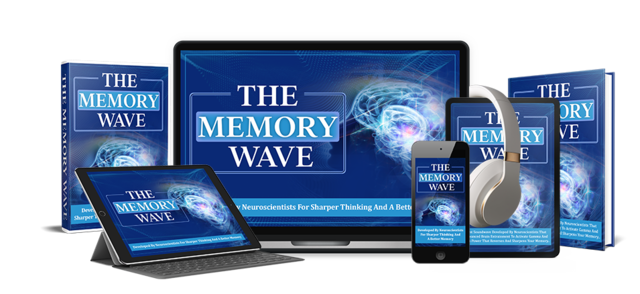
Support your memory and focus with a 12-minute daily audio session for a one-time $39, backed by a 90-day money-back guarantee.
GET INSTANT ACCESS NOW →